PRODUCT: autonomous home robot
ROLE: user researcher
TYPE: generative research | product ideation
METHODS: user interviews | quantitative surveys | participatory workshops
AI-generated alt text
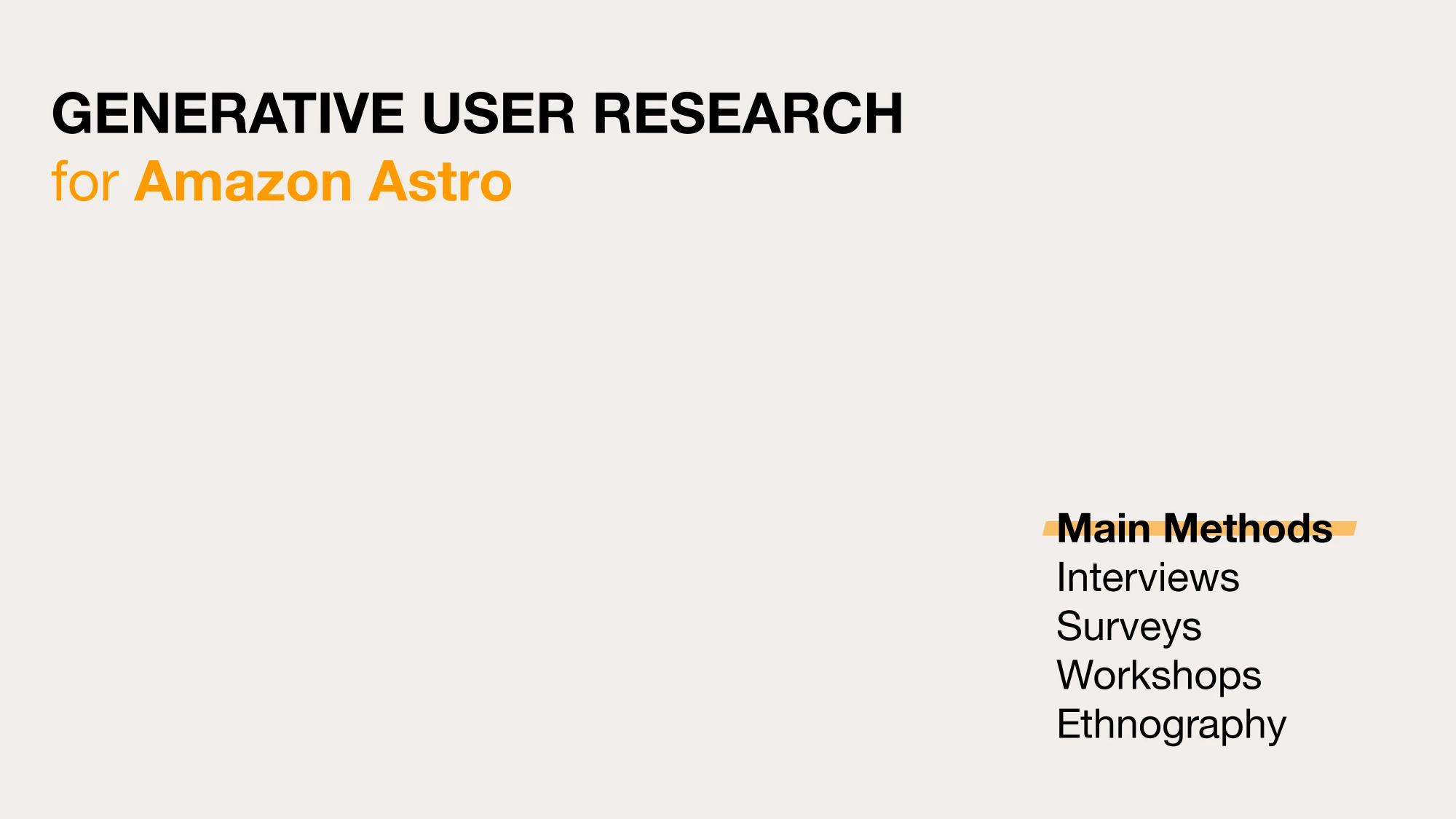
English: Title slide: “Generative user research for Amazon Astro,” with a list of main methods at the lower right: interviews, surveys, workshops and ethnography.
日本語:「Amazon Astro のためのジェネラティブ・ユーザーリサーチ」というタイトルスライド。右下に、主な手法としてインタビュー、サーベイ、ワークショップ、エスノグラフィーが挙げられている。 AI-generated alt text
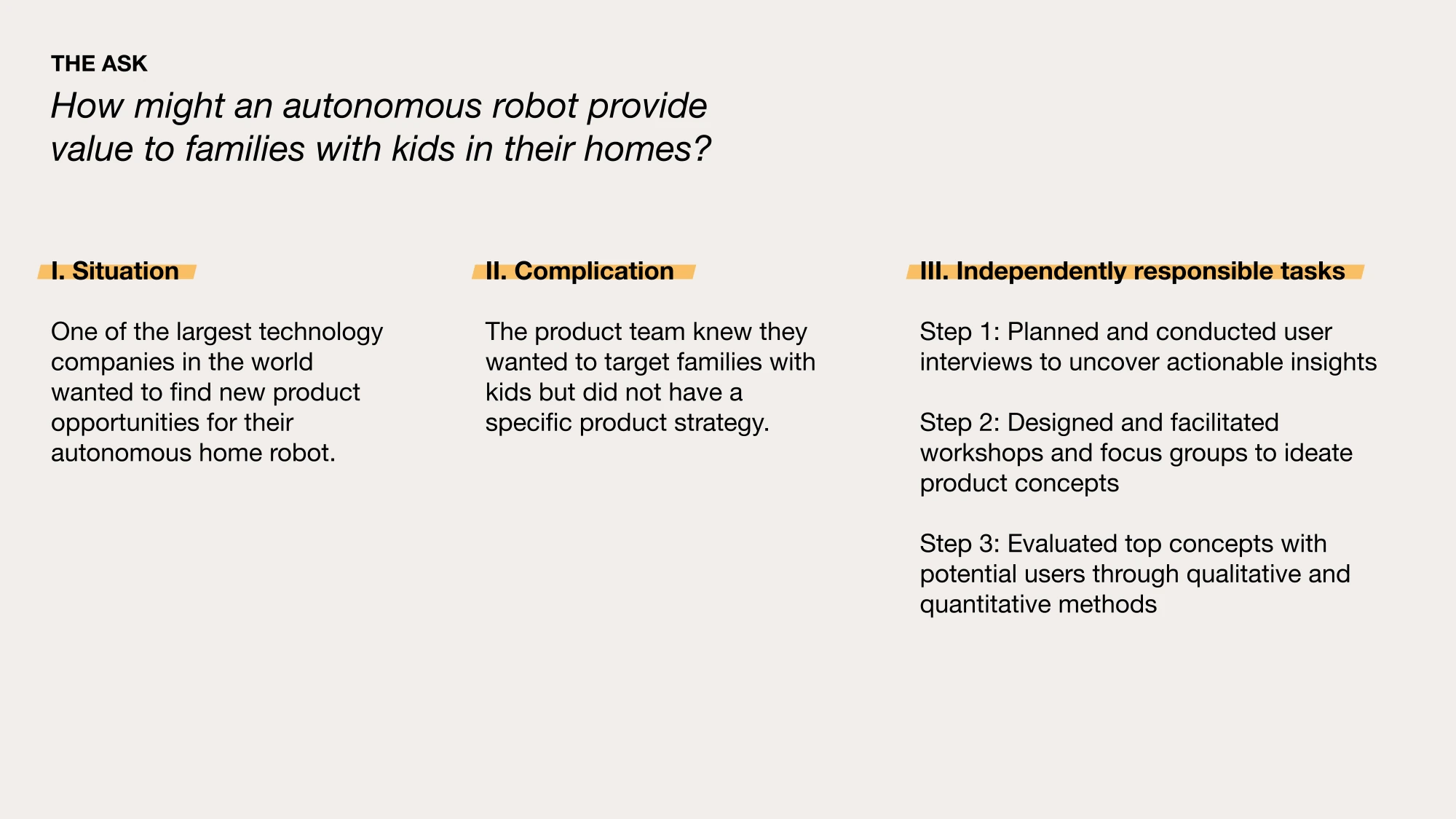
English: Slide “The ask: How might an autonomous robot provide value to families with kids in their homes?” Three columns: the situation (a large tech company wanted new product opportunities for its home robot); the complication (the team wanted to target families with kids but had no specific strategy); and my independently responsible tasks (user interviews, workshops and focus groups to ideate concepts, and evaluating top concepts with users).
日本語:「依頼内容:自律型ロボットは、子どものいる家庭でどんな価値を生めるか?」のスライド。3列構成で、状況(世界有数のテクノロジー企業が、家庭用ロボットの新しい製品機会を探していた)、課題(子どものいる家庭を狙うことは決まっていたが、具体的な戦略がなかった)、自分が任された仕事(ユーザーインタビュー、アイデアを出すワークショップとフォーカスグループ、有望なコンセプトのユーザー評価)を説明している。 AI-generated alt text
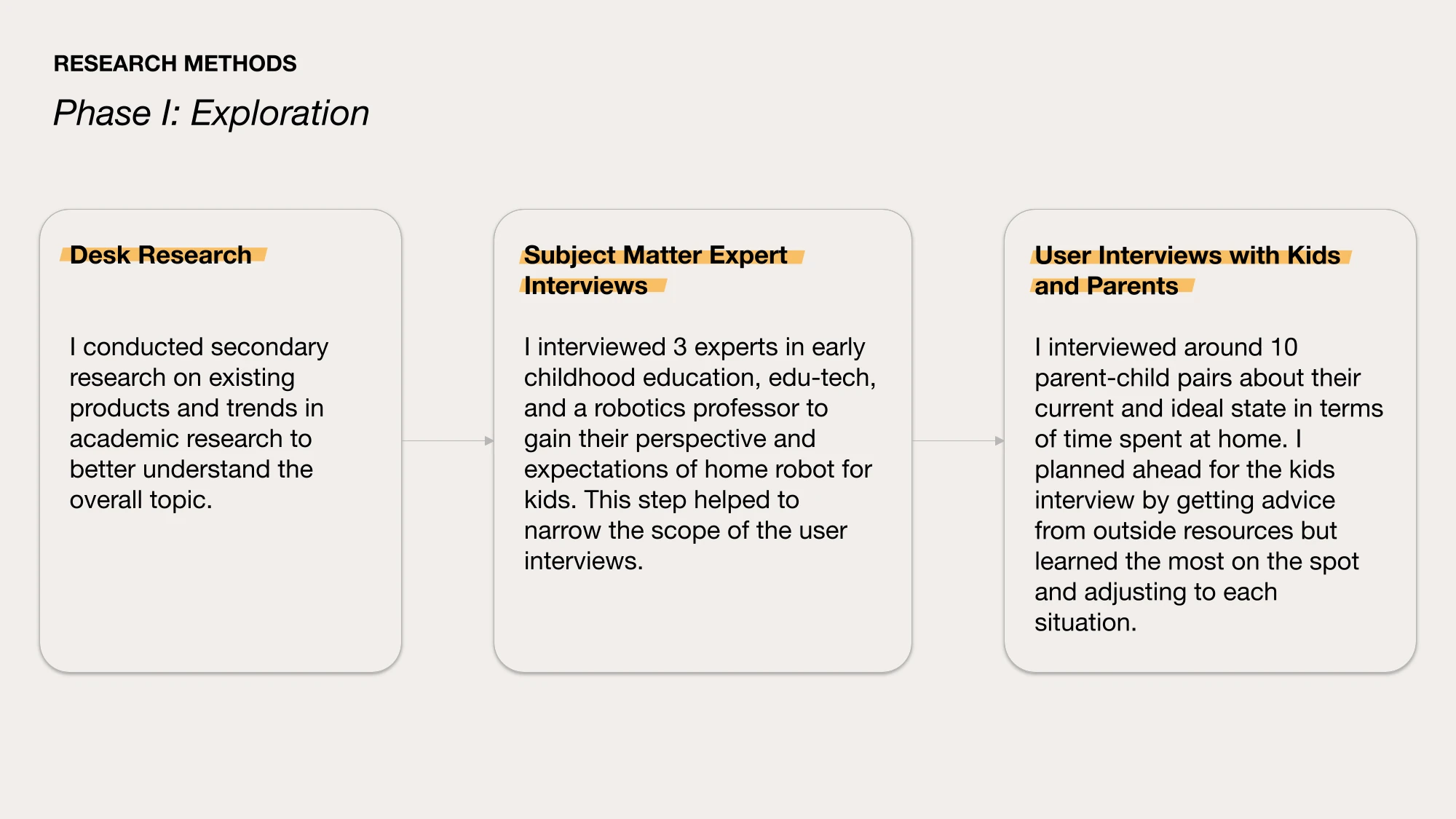
English: Slide “Research methods, Phase I: Exploration” with three connected cards: desk research on existing products and trends; interviews with three experts in early childhood education and edu-tech and a robotics professor; and interviews with around ten parent-child pairs about their current and ideal time at home.
日本語:フェーズ1「探索」のスライド。3枚のカードが矢印でつながっている。既存製品や学術研究のデスクリサーチ、幼児教育やエドテックの専門家3人とロボット工学の教授へのインタビュー、約10組の親子に家で過ごす時間の現状と理想をたずねたインタビュー。 AI-generated alt text
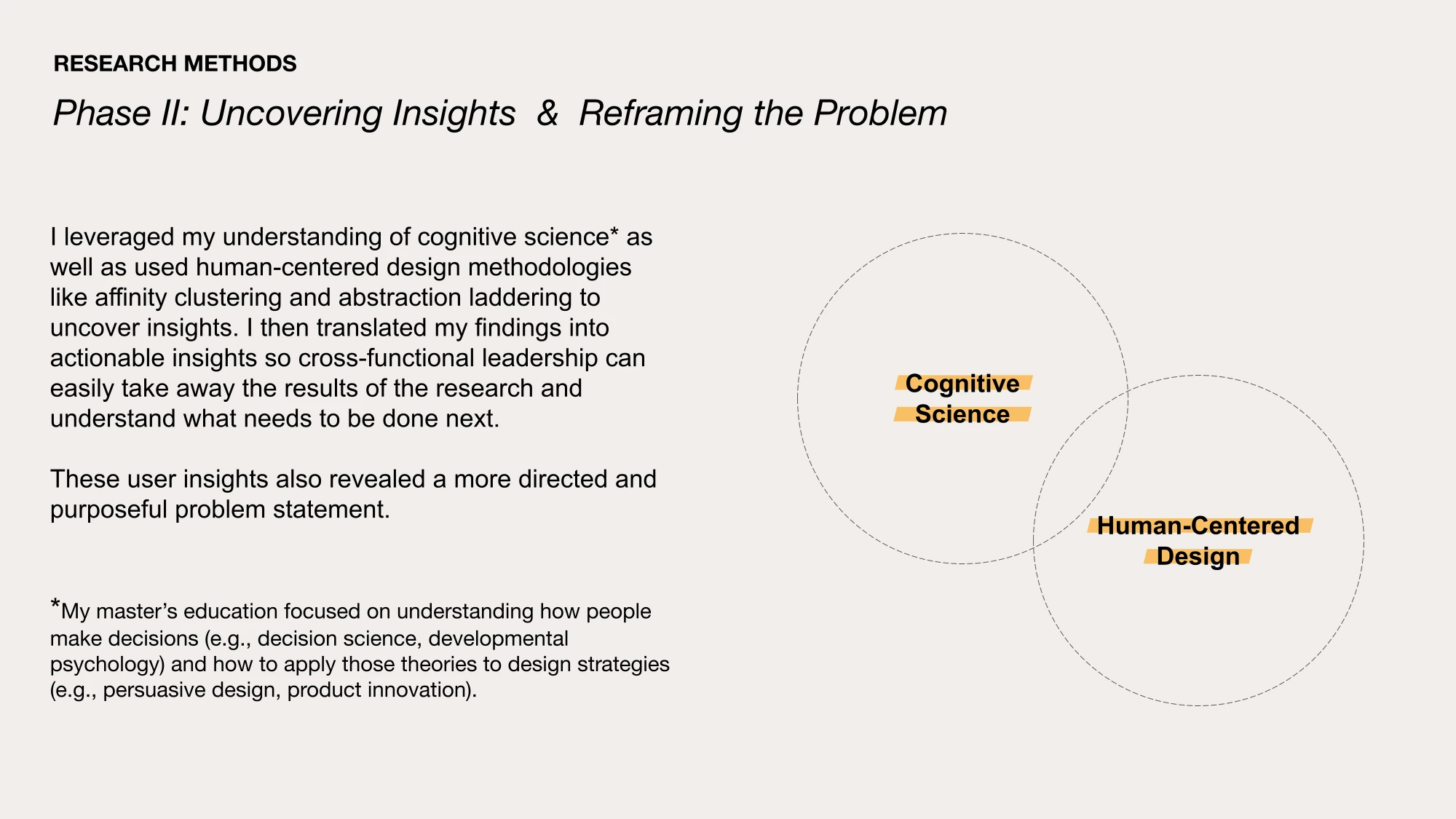
English: Slide “Research methods, Phase II: Uncovering insights and reframing the problem.” Text explains using cognitive science and human-centered design methods such as affinity clustering and abstraction laddering to turn findings into actionable insights and a more focused problem statement. Two overlapping dashed circles read “Cognitive science” and “Human-centered design.” A footnote describes a master’s education in decision science and developmental psychology.
日本語:フェーズ2「インサイトの発見と問いの再設定」のスライド。認知科学の知識と、アフィニティ・クラスタリングや抽象化のはしごといった人間中心設計の手法を組み合わせ、発見をチームが動きやすいインサイトにまとめて、より焦点の定まった問いを見つけたと説明している。右には「認知科学」と「人間中心設計」の円が重なる図があり、下の脚注では、意思決定の科学や発達心理学を学んだ修士課程に触れている。 AI-generated alt text
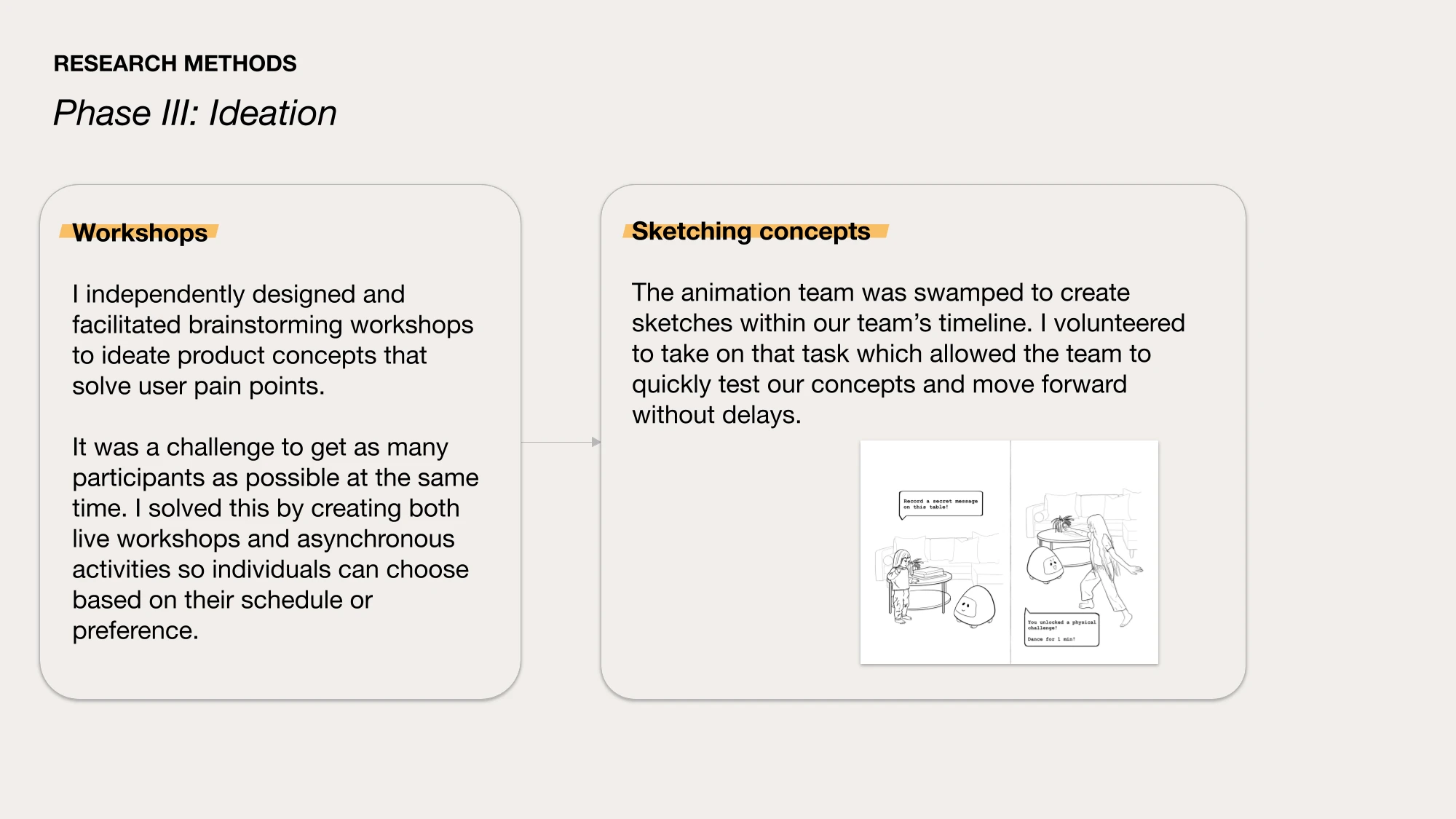
English: Slide “Research methods, Phase III: Ideation” with two cards. Workshops: I independently designed and facilitated brainstorming workshops, offering both live and asynchronous activities so more people could take part. Sketching concepts: I volunteered to draw concept sketches when the animation team was swamped. A small image shows comic-style sketches of the robot interacting with a child.
日本語:フェーズ3「アイデア出し」のスライド。2枚のカードで、「ワークショップ」(ブレインストーミングを一人で設計・進行し、ライブと非同期の両方で参加しやすくした)と、「コンセプトのスケッチ」(アニメーションチームが手一杯だったため、自分でスケッチを引き受けた)を紹介している。右のカードには、ロボットと子どもを描いた漫画風のスケッチが小さく載っている。 AI-generated alt text
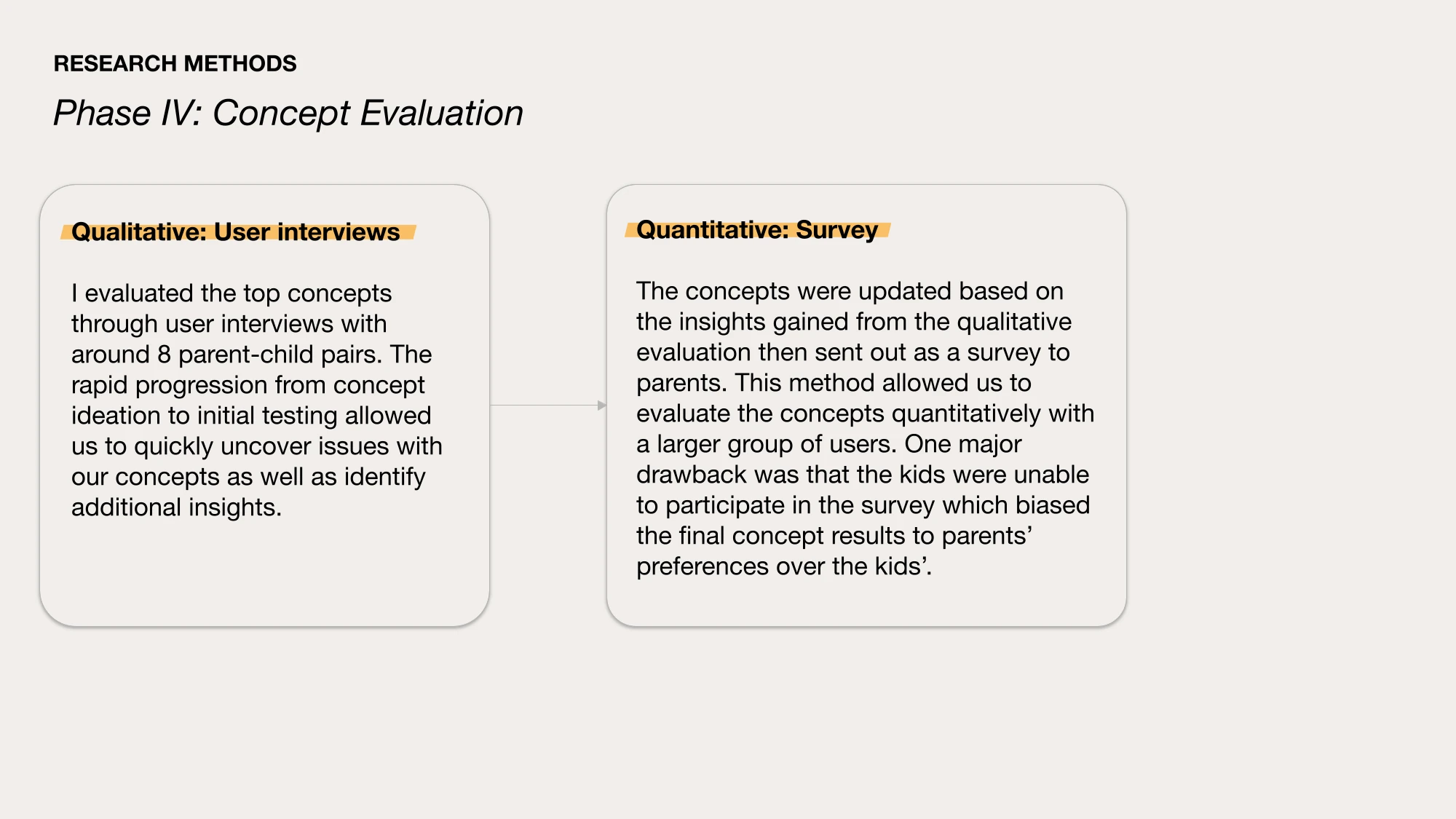
English: Slide “Research methods, Phase IV: Concept evaluation” with two cards. Qualitative: user interviews with around eight parent-child pairs to quickly find issues with the concepts. Quantitative: a survey of parents on the updated concepts, with the drawback that children could not take part, biasing results toward parents’ preferences.
日本語:フェーズ4「コンセプト評価」のスライド。2枚のカードで、定性評価(約8組の親子へのインタビューで、コンセプトの課題を素早く洗い出した)と、定量評価(更新したコンセプトを親向けのアンケートで評価した)を説明している。後者は子どもが回答できず、結果が親の好みに偏ったという課題も書かれている。 AI-generated alt text
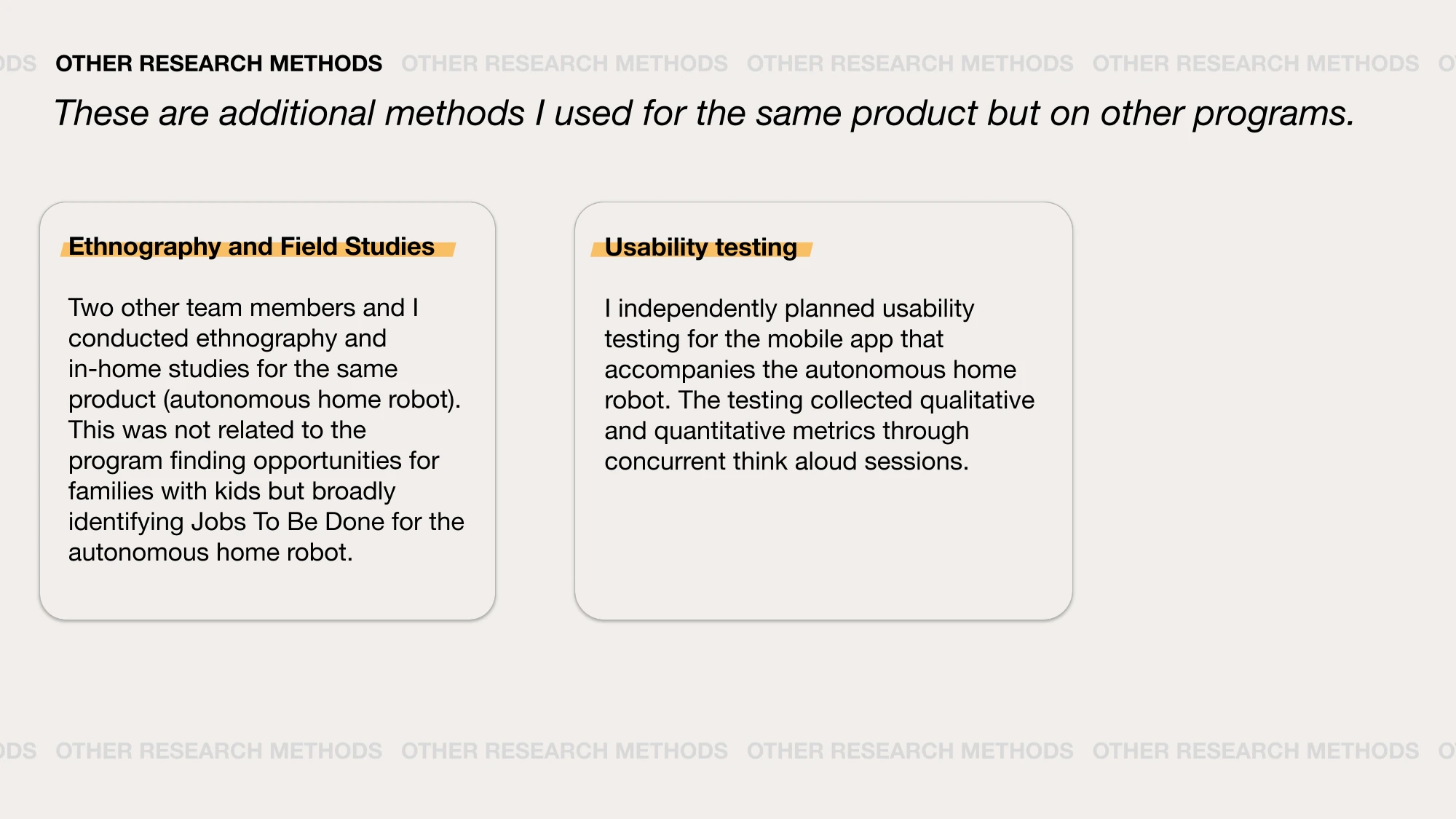
English: Slide “Other research methods,” additional methods used for the same product on other programs. Ethnography and field studies: in-home studies with two teammates to identify jobs to be done for the home robot. Usability testing: independently planned think-aloud testing for the robot’s companion mobile app.
日本語:「その他のリサーチ手法」のスライド。同じ製品の別のプログラムで使った手法を2枚のカードで紹介している。エスノグラフィーとフィールド調査(チームの2人と家庭を訪ね、家庭用ロボットのJobs To Be Doneを探った)と、ユーザビリティテスト(ロボットに付属するアプリを対象に、思考発話法で行うテストを自分で計画した)。